

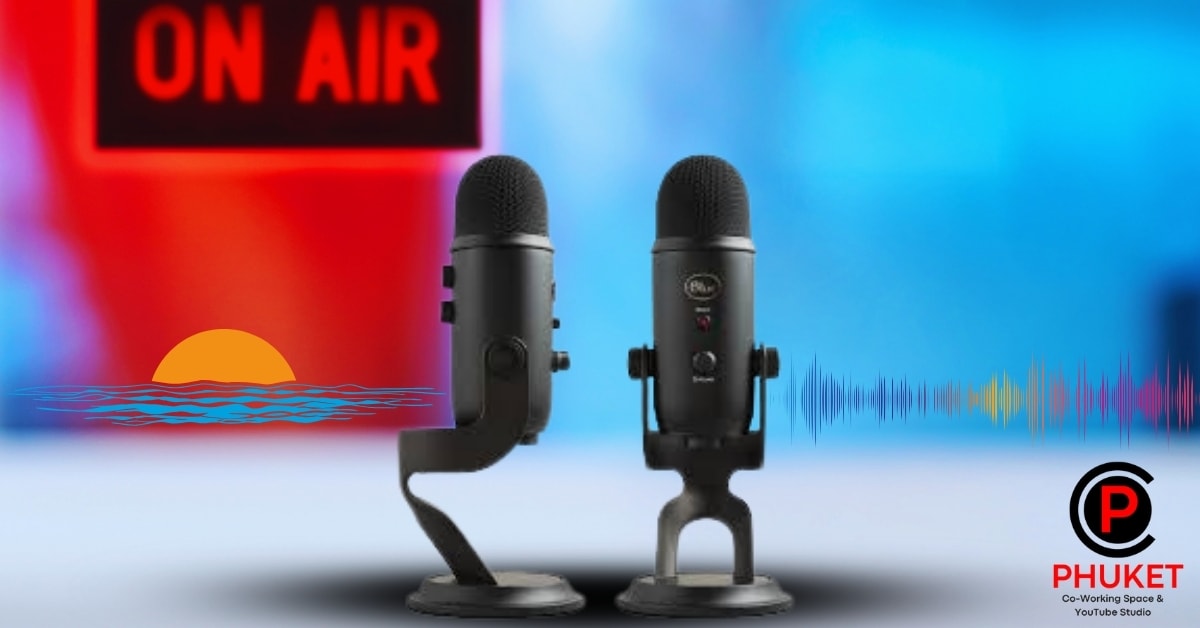
Best Studio Recording Microphone: Mic Drop! Discover Your Perfect Sound in Phuket
 Written by 0032June 5, 2025
 Best Studio Recording Microphone in a Professional Content Creation Space

Phuket! Just the name conjures up images of dynamic energy and inspiring landscapes. Now, imagine channeling that very vibrancy into your professional content at the cutting-edge Phuket Co Working Space (PCWS)! Whether you’re focused on recording voiceovers for engaging videos, achieving exceptional sound quality for your next podcast, or ensuring your online course audio is impeccable, one of the critical components of your recording setup is the equipment quality.
Get ready to discover how the best recording microphone can transform your sound from ‘good’ to ‘studio quality’ within the collaborative and creative atmosphere of a YouTube recording studio like Phuket Co Working Space.

Understanding Your Sonic Toolkit: Condenser, Dynamic, and the Versatile Blue Yeti at PCWS
When it comes to capturing professional audio, the choice of microphone is paramount. At Phuket Co Working Space, creators primarily utilize the highly versatile Blue Yeti Microphone. To understand its capabilities fully, it’s helpful to explore the broader world of studio microphones.
Think of condenser mics – often the MVPs of the recording studio – as sonic detectives. They possess the ability to capture the most delicate, detailed sound with a breathtakingly wide frequency response. When considering a vocal microphone for professional voice work, a large diaphragm condenser mic is often the best condenser mic choice. These microphones are masters of revealing the natural sound reproduction and crystal clear sound of your voice, capturing even subtle nuances.
While PCWS focuses on the Blue Yeti for its adaptability, a popular example of a condenser mic often found in the larger recording studio setups is the Audio Technica AT2020. This budget microphone delivers impressive clarity. Its cardioid polar pattern acts like a focused spotlight, picking up your desired sound while politely declining unwanted room noise. Notably, many condenser microphones, including the Blue Yeti, offer various pickup patterns, such as omnidirectional mics that capture sound from all directions, or figure-8 patterns. The cardioid mics setting on the Blue Yeti, however, is excellent for isolating your performance and minimizing background noise. Remember, these sonic powerhouses typically require phantom power, a little jolt of energy delivered through the trusty xlr mic cable from your audio interface. You might even consider a shock mount to further isolate your best studio microphone from vibrations, ensuring pristine recording quality.

Beyond Condensers: The Versatile World of Dynamic Mics
Now, let’s talk about the rugged heroes of the microphone world: dynamic microphones. These mics are built tough and can fearlessly handle even energetic speech or louder delivery without distortion. Dynamic mics are a great choice for spoken word content, providing a rich and controlled sound with excellent noise rejection. Their robust design contributes to excellent noise rejection, making them less susceptible to the gremlins of handling noise and pesky background noise, making them reliable allies even when the acoustic environment isn’t perfectly pristine. Plus, these workhorses don’t need phantom power – they’re ready to roll! You might find that a dynamic mic is a versatile mic for various recording needs.
This brings us back to the Blue Yeti Microphone available at PCWS. This fantastic option is a condenser microphone that embodies versatility and sounds incredible! Its ability to switch between multiple polar patterns – including cardioid, omnidirectional, bidirectional, and stereo – makes it adaptable for a wide range of content creation, from solo voiceovers demanding focused sound quality to group podcasts needing to capture multiple voices. The Blue Yeti’s ease of use and excellent sound quality make it an ideal vocal mic and an accessible tool for achieving professional results in the well-equipped studio at PCWS.
Finally, for those seeking a touch of vintage warmth and a velvety natural sound for their voice recordings, ribbon mics offer a unique sonic palette. They excel at capturing a natural sound, particularly on vocal microphones and spoken word, imparting a classic mic vibe to your recording quality. However, these delicate beauties require a gentle touch and careful handling. While not the primary mic at PCWS, understanding their characteristics provides a broader view of the sonic possibilities.

Elevate Your Content Creation at PCWS!
The quest for the best mic is an exciting journey, and at PCWS, you have the perfect launchpad for your content creation endeavors. While they may not have a traditional mic locker with numerous options, their dedicated YouTube Studio provides a single, high-quality and versatile tool – the Blue Yeti Microphone – ready to unlock exceptional audio for your content.
Understanding various microphone features, such as the polar pattern and frequency response, will guide your choice – especially when utilizing the versatile Blue Yeti Microphone. While you’ll be primarily working with this single, high-quality condenser microphone, understanding the characteristics of different microphone types, like the detailed sound of a condenser mic for nuanced delivery or the noise rejection of dynamic microphones, will enhance your ability to use the Blue Yeti effectively. Its switchable polar patterns, from the focused cardioid mics to the expansive reach of omnidirectional microphones, offer a spectrum of sonic possibilities.
Don’t be intimidated by focusing on one excellent vocal mic; embrace the exploration of the Blue Yeti’s capabilities and trust your senses! This versatile mic can help you achieve incredible sound for various content formats in the dynamic heart of Phuket!
For those setting up a home studio later, your experience with the Blue Yeti will be invaluable in understanding what to look for in studio mics and ultimately the best microphone for your purposes. The recording quality you achieve will speak for itself!

Best Studio Recording Microphone FAQS
What are the key microphone features I should consider?
Important features include the polar pattern (e.g., cardioid polar pattern for focused pickup, omnidirectional microphones for capturing sound from all around), frequency response (how the mic responds to different frequencies, with some aiming for a flat frequency response for accurate reproduction), and noise rejection capabilities.
Will I need any extra equipment for the microphones at PCWS?
Phuket Co Working Space provides the necessary audio interface and XLR mic cable to connect the Blue Yeti. As a condenser microphone, the Blue Yeti requires phantom power, which is typically supplied by the audio interface available in the studio. You might also find a shock mount provided to help minimize vibrations and ensure cleaner recordings.
What are some good budget mic or best budget mic options for beginners?
For those starting out, consider well-regarded options like the Audio-Technica AT2020 or the Rode NT1. These are often cited as excellent examples of a best budget mic that provides good sound quality without a high cost. Your experience with the professional Blue Yeti at PCWS will help you identify valuable features to look for in a budget mic.
What’s the difference between a condenser mic and a dynamic mic?
Condenser mics are generally more sensitive and capture detailed sound, often used for vocals and quieter sources. Dynamic mics are more robust, handle loud sound sources well, and are less sensitive to room noise.
What does a cardioid polar pattern mean?
A cardioid polar pattern picks up sound primarily from the front of the microphone, rejecting sound from the rear and sides. This helps to isolate the desired sound source and reduce room noise.
What if I need to record loud sound sources?
Dynamic microphones are generally better suited for recording loud sound sources due to their ability to handle high sound pressure levels without distortion.
How can I minimize background noise in my recordings?
Using a microphone with good noise rejection (like a cardioid dynamic mic), recording in a treated space (like PCWS’s acoustically insulated studio), and being mindful of your recording environment are key.
With so many mics available, how do I make the best choice for recording vocals or acoustic instruments?
Consider the detailed sound often captured best by condenser mics for vocals and acoustic instruments, versus the robust nature of dynamic mics like the Shure SM7B for certain vocal styles and louder sources. Experimenting with the Blue Yeti microphone at PCWS will help you find your preference.
Are there versatile mics available, and what’s a popular option for quality sound?
Yes, microphones like the Blue Yeti (available at PCWS) offer different polar patterns, making them versatile for various recording needs. The Shure SM7B is a popular choice for a dedicated vocal mic often praised for its quality.
If I only have a few mics available, what type might be best to record sound from an acoustic guitar or even use as drum overheads?
For acoustic guitar, a versatile condenser microphone (like the Blue Yeti at PCWS) could capture its detailed sound. For drum overheads with limited mics, you might experiment with condenser mics for a general sound, though dedicated dynamic or small-diaphragm condensers are often preferred.